Foundation and Basement Excavation in Utah: What Homeowners Should Expect Before Construction Begins
When people picture building a home, they usually think about the finished product.
They think about the framing going up, the views from the windows, the layout of the kitchen, the shop out back, or the way the house will sit on the property when everything is finally done.
What they usually do not think much about is the excavation work that happens first.
But before concrete is poured and before a foundation starts taking shape, the ground has to be prepared properly. And when that work is not done right, the consequences tend to show up later, usually at a much more expensive stage of the project.
At Dig Deep Excavation, we help homeowners, builders, and property owners throughout Utah with foundation and basement excavation that sets the rest of the project up the way it should be from day one.
What foundation and basement excavation actually involves
Foundation excavation is the process of preparing the ground for the structural base of a home, garage, shop, addition, or other building.
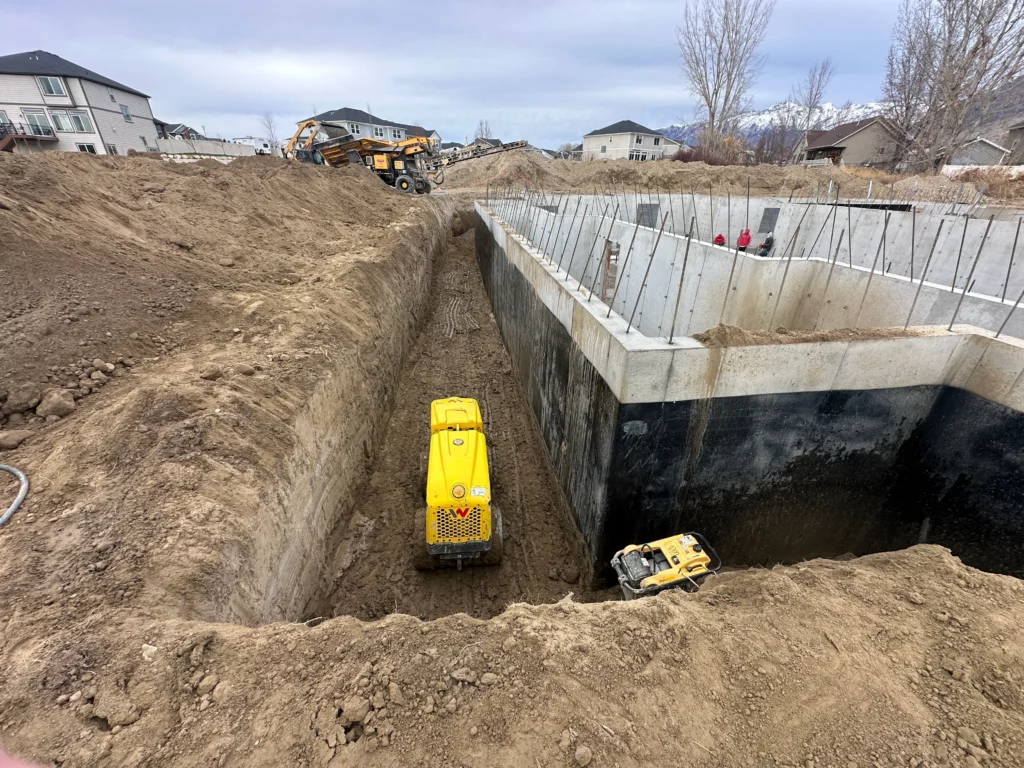
If the project includes a basement, the excavation work goes deeper and becomes more involved. Instead of just preparing for footings and a slab, the site has to be cut to the depth and dimensions needed to support the full basement footprint.
Depending on the project, this work may include:
- Clearing and opening the build area
- Stripping topsoil
- Excavating to the required depth
- Cutting and shaping the building footprint
- Hauling off excess material or relocating it on site
- Preparing the area for footings and foundation work
- Addressing slope, drainage, and access concerns
- Coordinating with the next phase of construction
To someone driving by, it may just look like a hole in the ground. But that hole has to be in the right place, at the right depth, with the right layout, and shaped in a way that supports everything that comes next.
This is one of the most important early stages of a build
A lot of construction problems do not begin with framing or finish work.
They begin underneath it.
If the excavation is off, even by more than it should be, it can throw off the rest of the project. That might mean drainage issues, elevation problems, access headaches for other trades, delays with foundation crews, or extra cost correcting something that should have been handled correctly from the start.
Good excavation work is not flashy, but it matters. It creates the starting point for everything else.
When the site is excavated well, the project tends to move forward with fewer surprises. When it is not, those problems have a way of carrying forward.
Basement excavation is not just “digging deeper”
Homeowners sometimes assume basement excavation is basically the same as any other excavation job, just a little bigger.
In reality, it requires more planning and more precision.
A basement dig changes the scale of the work. There is more material to move, more depth to manage, more room for drainage concerns, and more reason to pay close attention to how the site is laid out. Access matters. Slope matters. Soil conditions matter. So does how the excavation ties into the eventual foundation and surrounding grade.
The same property that looks simple on the surface can become a very different job once basement depth enters the picture.
Utah properties can add complexity quickly
Utah is a great place to build, but not every lot is straightforward.
Some sites have rocky soil. Some are sloped. Some have tighter access than they appear to at first glance. Others may have runoff concerns, uneven terrain, buried debris, or soil conditions that affect how the excavation needs to be approached.
A lot can look clean and open and still present challenges once equipment starts working.
That is one reason it helps to hire an excavation contractor who understands that this is not just about removing material. It is about preparing the site to actually perform once the build begins.
Site layout matters before the first bucket hits the ground
Before excavation begins, the contractor should have a clear understanding of where the structure is going, how the site is laid out, and what the final plan requires.
That includes things like:
- The location and footprint of the home or structure
- Basement depth and foundation needs
- Access for equipment and concrete crews
- Slope and drainage around the build area
- Where spoil material will go
- How the excavation affects the rest of the lot
- What the next trade needs to happen smoothly
This is one reason rushed excavation work can create so many headaches. If the site is not thought through in the context of the full build, the dirt work may get done, but the project will feel the consequences afterward.
Drainage around a foundation starts long before the house is finished
One of the biggest mistakes people make is thinking drainage is something you deal with after the home is already built.
In reality, drainage starts with the excavation and site prep.
The way the ground is cut, shaped, and prepared early on plays a big role in how water behaves around the finished structure. If the lot is not approached with water in mind, the home may end up fighting runoff, pooling, erosion, or moisture problems later.
That does not mean every excavation project is complicated. It just means good contractors think ahead.
A foundation is not only supposed to hold the structure up. The surrounding site has to work with it, not against it.
Access is a bigger deal than many homeowners expect
Excavation is not happening in a vacuum.
There are machines getting in and out, dirt being moved, foundation crews coming next, and often a fairly tight sequence of work that has to happen efficiently.
If access is poor, the job becomes harder than it needs to be. If the excavation is done without thinking about what comes next, it can slow down the entire construction schedule.
This is especially true on tighter lots, custom home sites, rural properties, or sloped ground where the equipment has less margin to work with.
Soil conditions can affect the job
Not every site behaves the same once you start digging.
Some properties are relatively clean and predictable. Others are not. Hard-packed ground, rock, loose fill, buried materials, or uneven subsurface conditions can all influence how the work proceeds.
This is where experience and judgment matter.
A good contractor can adapt to site conditions without turning every unexpected detail into chaos. They know how to evaluate what they are seeing, communicate clearly, and keep the project moving in a practical way.
Homeowners should expect some dirt, noise, and movement
It sounds obvious, but this part is worth saying plainly.
Foundation and basement excavation is a heavy equipment phase of the project. There will be dirt piles, machine traffic, noise, and a lot of visible change in a short period of time. The property often looks messier before it starts looking better.
That is normal.
What matters is whether the work is organized, intentional, and moving toward the right outcome.
The early phase of construction rarely looks polished. It is not supposed to. The goal is to get the site ready properly so the structural work can begin without unnecessary issues.
What a good excavation contractor should communicate
Homeowners do not need a technical lecture. But they do deserve clarity.
A good excavation contractor should be able to explain the general scope of the work, what they are seeing on the property, what might affect timing, and how the excavation ties into the next stage of the build.
That might include conversations about:
- Site conditions
- Layout and depth
- Drainage considerations
- Material removal or placement
- Access limitations
- Coordination with foundation crews
- Any issues that need to be addressed before moving forward
The best contractors are usually not the ones who overcomplicate everything. They are the ones who can explain the job simply and honestly.
Why cutting corners here is risky
There are places in construction where mistakes are easier to fix.
This is not really one of them.
Once excavation is complete and the foundation process starts moving, changes become more expensive. If something was missed, rushed, or done without enough thought, it can create delays and added cost at exactly the point in the project where momentum matters most.
That is why it is worth getting this stage right.
Solid excavation does not just save trouble in the short term. It helps protect the long-term performance of the build.
Foundation excavation should support the whole project, not just the next step
This is a subtle point, but an important one.
A good excavation contractor is not just thinking about how to finish their portion of the work. They are thinking about how their work supports the next contractor, the next inspection, the next phase of the build, and the finished site after the home is complete.
That mindset makes a difference.
It helps prevent bottlenecks. It reduces rework. And it usually leads to a better overall building experience for the homeowner.
Building in Utah starts with the ground beneath it
Every structure depends on what happens before it ever becomes visible.
That is why foundation and basement excavation matters as much as it does. It is the starting point. It shapes the site, supports the structure, and influences how smoothly the rest of the project moves forward.
At Dig Deep Excavation, we provide foundation and basement excavation services throughout Utah with a focus on thoughtful site prep, clear communication, and work that helps the next phase of construction happen the way it should.
Need foundation or basement excavation in Utah?
If you are planning a new home, addition, shop, or other build, contact Dig Deep Excavation today to schedule an estimate. We will take a look at the property, talk through the scope, and help you get the project started on solid ground.